Pilsen
The Life ListPilsen becomes the place where Brett Bohlinger turns an unwanted housing search into a home of her own. At first she approaches Chicago’s South Side with apprehension, measuring it against the safety and comfort of her mother’s Astor Street brownstone. In Pilsen, a red-brick house, a small apartment, and the everyday life of the neighborhood gradually change that measure: the place she had not imagined choosing becomes the home from which she can picture a different future.
Setting and First Impressions
Pilsen enters Brett’s search amid her attempt to find somewhere to live outside Astor Street. She has printed listings and hopes to locate a particular attractive brick house, but on an earlier drive she cannot find its listing among the pages. Instead, she visits other addresses in Little Italy and encounters properties that look nothing like their online photographs: one is a cement-block building with a boarded-up front window, and another sits behind a yard strewn with discarded objects. The mismatch leaves her hurt, offended, and angry at what her mother may have expected her to accept.
Her first descriptions of South Side neighborhoods are shaped by the same unease. She thinks they look dismal, depressing, and possibly dangerous, then feels more hopeful in Little Italy’s lively shopping area and restaurants. Pilsen remains a prospect she has not yet visited, and her hesitation shows how strongly she depends on familiar markers of comfort before she can imagine settling somewhere. Elsewhere, while teaching Amina Adawe, Brett encounters a crumbling tenement, a littered hallway, and a basement apartment; that separate visit makes visible her fear of the housing conditions she may have to navigate, rather than establishing that Amina lives in Pilsen.
Finding a Home
In February, Brett drives through Pilsen intending to make only a brief visit before reporting another fruitless search to Joad Bohlinger and Brad Midar. The neighborhood is busy: Mexican bakeries and grocery stores stand along its commercial streets, and Mexican artwork catches her attention. She recognizes a distinctive local character and imagines the people around her as searching for a better life, as she is. Her first impression is not uncomplicated delight. On West 17th Place, she sees potholed pavement, worn prewar wooden houses, and an empty lot littered with soda cans and liquor bottles, and decides she has seen enough.
Then a rental sign brings her to the very red-brick house she had seen online six weeks earlier. It is still available, which prompts her to suspect that something must be wrong inside, but its exterior appeals to her. Five windows have buttery-yellow decorative cornices; an iron fence encloses the property; and a dozen concrete steps rise to two front doors framed by urns of plastic poinsettias. Brett smiles at the flowers and reads the care given to the house as evidence that its owner takes pride in it. Yet the sight does not immediately settle her choice: she still wonders whether she should trade the brownstone, where she feels safe and settled, for a home in Pilsen.
The home she eventually rents is not that red-brick house but a small apartment shown to her by Blanca Ruiz and her daughter, Selina. Brett climbs a walnut staircase to the apartment, where an old marble fireplace anchors the main room and an immaculate kitchenette occupies the back. A bedroom about the size of her mother’s walk-in closet opens onto a bathroom with pink-and-black tiles, a pedestal sink, and a claw-foot tub. The entire place could fit inside her mother’s living room. Selina points out details, including the Ikea bathroom cabinet she chose herself, while Blanca watches with evident pride. The apartment’s scale is a sharp contrast with Astor Street, but on a cold, gray day Brett finds it cozy rather than cramped.
Neighbors and a Different Measure of Home
Selina explains how the apartment came to be theirs: her mother cooks at El Tapatio nearby and had long promised that they would one day have a house of their own. When the property went into foreclosure, Blanca had saved enough for a down payment; mother and daughter then spent seven months fixing up the apartment. Selina’s account recalls Brett’s own mother, but Brett stops herself from presenting the stories as equivalent. She recognizes that the resemblance is limited and that the encounter has humbled her by reminding her how fortunate she has been.
That recognition complicates Brett’s earlier judgments of the neighborhood. Pilsen is not simply a backdrop of worn streets or a cheaper substitute for a brownstone: it is also a place where people have invested labor, savings, and care in making a home. The change in her outlook does not erase the neighborhood’s visible difficulties. Instead, her attention expands to include both the condition of the street and the people who live and work there. The home she chooses is small and plainly different from the one she leaves, but its residents’ pride and welcome give it a meaning that cannot be read from a rental listing alone.
Moving In and Making a Life
Brett spends the weekend packing and carrying boxes to Pilsen. On Monday, movers bring a few furnishings from Astor Street to the apartment. Her mother’s iron bed is too large, and Brett decides it belongs in the brownstone, where it will be waiting when she visits. She brings her old double bed and cherry dresser, places a well-used love seat in front of the fireplace, and arranges mismatched end tables around it. A scratched coffee table from her mother’s attic and a thrift-store terra-cotta lamp complete the room. Four bowls and plates borrowed from her mother’s cupboard, spare utensils, pots, pans, cosmetics, and towels give the compact rooms the practical marks of daily life.
Once every box is unpacked, Brett lights six candles and opens wine. The candles and lamp warm the room; Rudy settles at her feet as she curls up on the sofa with a book and music playing from her laptop. She falls asleep there, in the apartment that only recently seemed like an uncertain alternative. The scene makes the move tangible: belonging is assembled from borrowed dishes, old furniture, and familiar routines, not from the size or polish of a house.
Home Beyond Astor Street
By late March, Pilsen has become more than the address where Brett sleeps. On a sunny morning, she walks Rudy and then jogs along Eighteenth Street, past Mexican bakeries, restaurants, and grocery stores. She recognizes that her mother was right to push her beyond her comfort zone: Brett had never imagined that she could call so modest a place home. The neighborhood’s ordinary commercial life, once encountered from a car during a reluctant search, is now part of her own daily landscape.
That change is tied to a widening sense of possibility. From Pilsen, Brett can imagine falling in love and having children, goals that had seemed unlikely within the months remaining before her September deadline. Her thoughts turn to Herbert Moyer, but the neighborhood’s importance is not limited to her romantic hopes. It gives her a home from which she can envision a future rather than merely endure a housing arrangement.
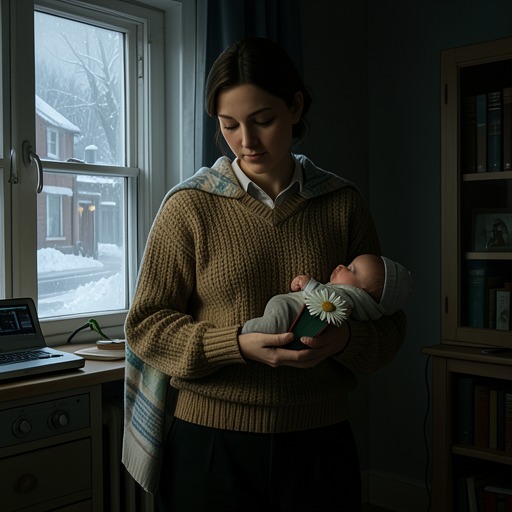
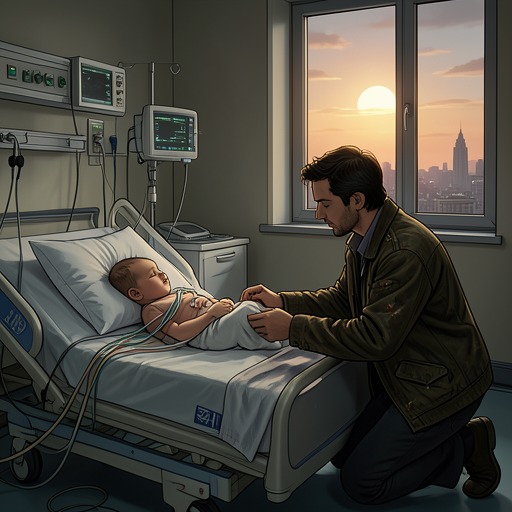
When Austin Elizabeth comes home from the hospital on May 6, Brett refuses Herbert’s insistence that the baby and she move back to Astor Street. She says Pilsen is their home for now and does not want to leave Blanca and Selina, who have followed Austin’s arrival through photographs and bought her tiny sneakers and stuffed animals. Their attachment to the baby, and Brett’s concern for them, show how the apartment has opened onto relationships beyond her original search for shelter. Pilsen is not presented as a final, permanent destination, but it is the home Brett chooses for herself and Austin at this point in their lives—a place where a once-reluctant move has become a claim to belonging.